
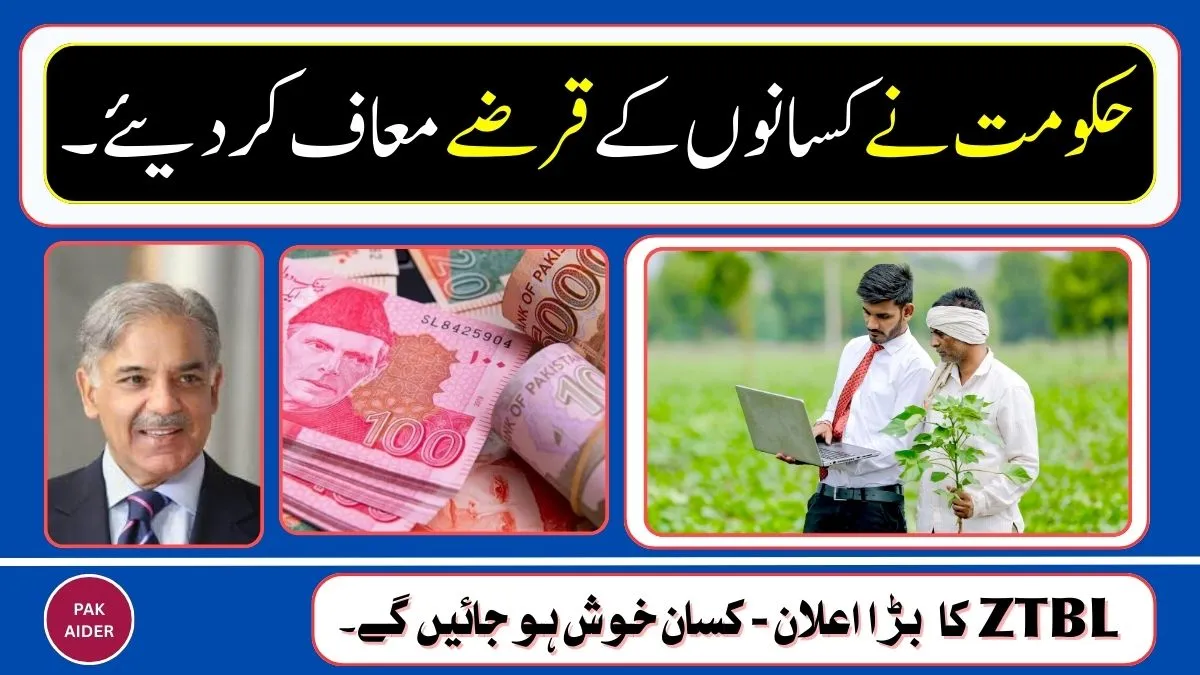
The government may write off farmer loans after floods in Pakistan, offering major relief to thousands of growers struggling with crop losses, debt pressure, and rising climate risks. According to policy discussions at the federal level, the state is actively considering ZTBL loan write-off and rescheduling options for flood-affected farmers, a move that could significantly stabilize Pakistan’s agriculture sector.
With floods damaging crops, infrastructure, and rural livelihoods across multiple provinces, this potential decision reflects a broader effort to protect food security, revive farmer confidence, and strengthen climate resilience.
Table of Contents

Flood-Affected Farmers and ZTBL Loan Relief Proposal
The ZTBL loan relief for farmers is under serious review following recommendations presented in a high-level cabinet meeting chaired by the Prime Minister of Pakistan. Officials acknowledged that agricultural debt after floods has become unmanageable for many small and medium farmers who rely on seasonal financing.
Key Relief Measures Under Consideration
- Partial or full write-off of ZTBL agricultural loans
- Rescheduling of outstanding repayments
- Waiver of markup and accumulated interest
- Flexible repayment timelines for affected regions
As Pakistan’s primary agricultural bank, Zarai Taraqiati Bank Limited (ZTBL) plays a critical role in rural financing. Any relief granted through ZTBL would directly impact farmers dependent on loans for seeds, fertilizers, diesel, and irrigation.

Wheat Farmers at Risk Due to Low Prices and Climate Losses
A major concern raised during discussions was the future of wheat farming in Pakistan. Officials warned that farmers, already hit by low wheat prices in the 2024–25 season, may avoid planting upcoming crops if financial pressure continues.
Why Wheat Growers Are Hesitant
- Flood-related crop damage and income loss
- Rising input costs with limited returns
- Uncertainty around government support price policies
- Outstanding bank loans and markup burden
Ministers stressed that any policy related to support prices or loan relief must involve direct consultation with farmers, ensuring decisions benefit real growers rather than middlemen or hoarders.
Provincial Responsibility and Climate-Resilient Agriculture Policy
The federal cabinet emphasized that agriculture and climate change policy in Pakistan largely fall under provincial jurisdiction. Given limited fiscal space at the federal level, future relief programs must be designed and funded jointly with provinces.
Two-Pronged Strategy Discussed
Short-Term Relief
- Emergency financial assistance
- Loan write-offs or repayment holidays
- Targeted aid for flood-hit districts
Long-Term Reforms
- Climate-resilient farming practices
- Crop insurance and risk-sharing models
- Improved water management and disaster planning
This approach aims to move beyond temporary fixes and address structural weaknesses in Pakistan’s agricultural system.
Climate Change, Population Pressure, and Policy Coordination
Officials also highlighted the growing impact of climate change in Pakistan, linking floods, droughts, and food insecurity to rapid population growth and environmental stress.
To ensure coordinated action, the government may convene an urgent meeting of the Pakistan Climate Change Council, established under the Climate Change Act 2017. A proposed high-level committee—led by the Planning Minister with provincial chief secretaries—would focus on:
- National climate adaptation strategies
- Agricultural resilience planning
- Sustainable food production policies
What This Means for Farmers in Pakistan
If approved, the ZTBL loan write-off after floods could bring meaningful relief to rural communities.
Expected Impact
- Immediate reduction in financial stress
- Improved confidence to plant wheat and other crops
- Protection of small farmers from default and land loss
- Stronger long-term climate adaptation planning
This decision could shape not only the future of Pakistan’s agriculture sector but also the country’s broader response to climate-driven economic risks.

Israr Ahmed is a technology educator and creator behind the YouTube channel “Israr Ahmed Technical,” where he shares practical IT, networking, cybersecurity, and software tutorials. He also runs DriveInTech.com and PakAider.pk to help learners and professionals grow in the digital world.