
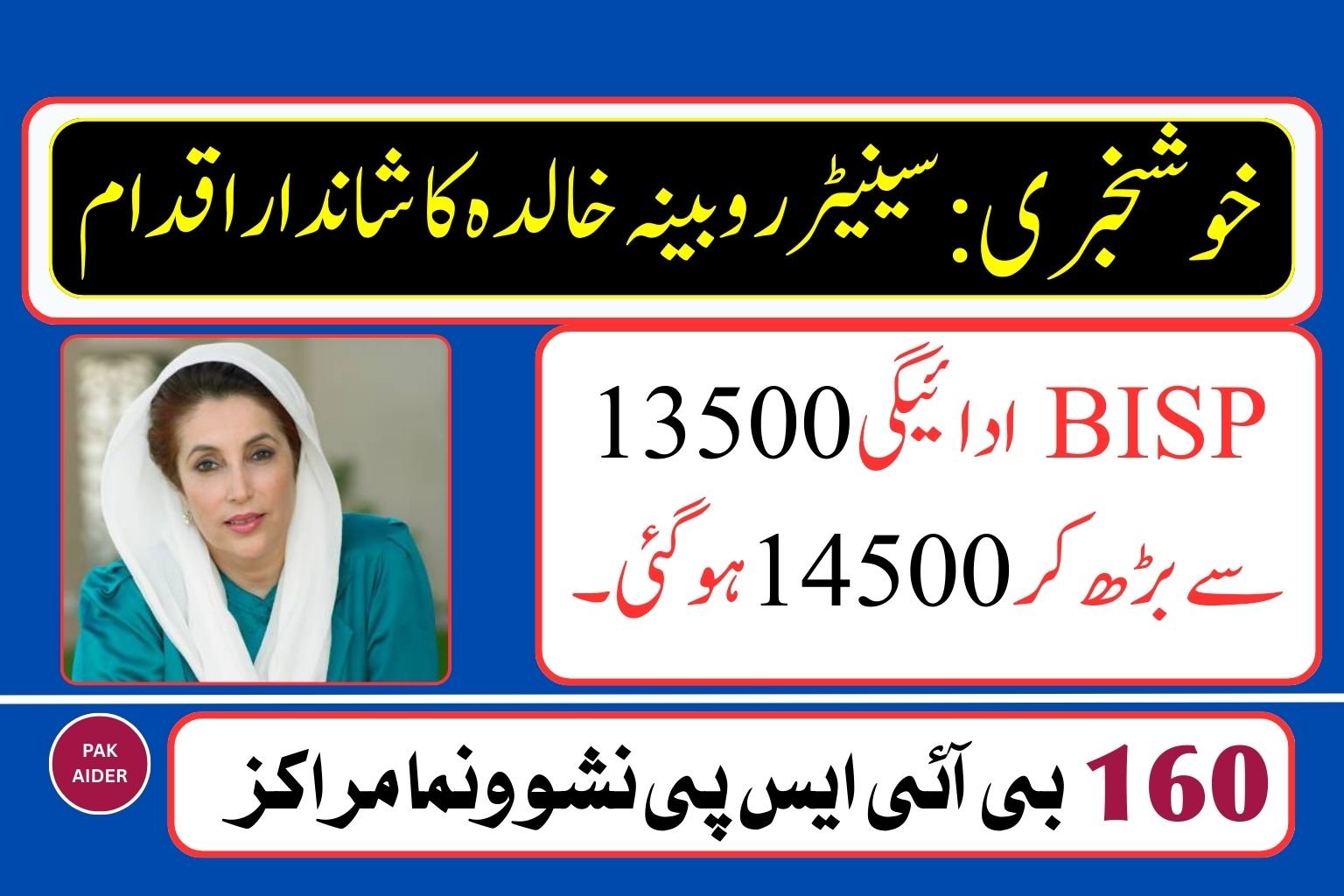
BISP 14500 Payment Update: BISP 14,500 quarterly payment has officially been announced as Senator Rubina Khalid inaugurated a modern Benazir Nashonuma Center in Peshawar. The Government of Pakistan has increased the quarterly financial assistance under the Benazir Income Support Programme (BISP) from Rs. 13,500 to Rs. 14,500, benefiting nearly 10 million registered families across Pakistan, including Khyber Pakhtunkhwa.
This step aims to provide stronger financial support to low-income families while also addressing child malnutrition and maternal health through the Benazir Nashonuma Program.
Table of Contents
BISP 14,500 Payment Increase – What You Need to Know
Chairperson Rubina Khalid inaugurated the new Nashonuma Center at Molvi Ji Hospital and announced the increase in quarterly cash assistance.
Updated BISP Payment Details
| Previous Amount | New Amount | Increase | Beneficiaries |
|---|---|---|---|
| Rs. 13,500 | Rs. 14,500 | Rs. 1,000 | ~10 million families |
The government has also increased education and Nashonuma stipends by Rs. 500 to further support registered families.
This increase is expected to help families manage rising inflation and basic household expenses.
Benazir Nashonuma Program – Fighting Child Stunting in Pakistan
Pakistan faces a serious child health crisis. Around 40% of children under five years suffer from stunting due to poverty and socio-economic challenges.
To tackle this issue, the government launched the Benazir Nashonuma Program, focusing on the first 1,000 days of a child’s life — a critical period for physical and mental development.
Child Stunting Situation in Pakistan
| Indicator | Percentage |
|---|---|
| Children under 5 with stunting | 40% |
| Stunting rate reduced (at 6 months among beneficiaries) | 20% |
| Improvement compared to non-beneficiaries | 6.2% better |
According to research by Aga Khan University Institute of Global Health & Development, stunting rates among beneficiary children at six months dropped to 20%, significantly lower compared to non-beneficiaries.
How the Benazir Nashonuma Centers Work
Currently, 542 Nashonuma Centers are operational nationwide in collaboration with the World Food Programme and provincial health departments.
In Khyber Pakhtunkhwa, there are:
- 160 active Nashonuma Centers
- 10 centers in Peshawar alone
Services Provided:
- Free nutritional supplements
- Health checkups for children under 2 years
- Support for pregnant and lactating mothers
- Monitoring of child growth for 24 months
Lady Health Workers are being trained to identify malnourished children and refer them to Nashonuma Centers for timely treatment.
Digital Wallet System for Transparent BISP Payments
To ensure transparency and quick payments, BISP has introduced a Digital Wallet System.
Key Features:
- Free SIM cards provided to beneficiaries
- Direct payment transfers
- Expected full activation by March
- Interoperability with banks across Pakistan
This initiative aligns with the vision of Asif Ali Zardari and Shehbaz Sharif to ensure transparent and corruption-free disbursement of funds.
Beneficiaries can now withdraw their stipends from banks nationwide under the Interoperability Program.
Benazir Taleemi Wazaif and Skills Program
Under the Benazir Taleemi Wazaif Program, students from low-income families receive financial support to continue education. Recently, a female student from a BISP beneficiary family secured a position in the Kohat Board exams, showing the positive impact of the program.
Additionally, the Benazir Skills Program is helping children from beneficiary families gain technical education and vocational training to become financially independent.
Impact of BISP on Women Empowerment
The Benazir Income Support Programme (BISP) has provided financial identity to millions of low-income women across Pakistan.
The program was originally launched during the government of Benazir Bhutto, who dedicated her political career to women empowerment and social welfare.
Today, BISP continues to:
- Strengthen women’s financial independence
- Improve child health and nutrition
- Support girls’ education
- Promote social and economic stability
Poverty Score Criteria Update
- In Balochistan, the poverty score threshold for eligibility is set at 60.
- Efforts are ongoing to extend benefits to residents of merged tribal districts (ex-FATA).
Final Thoughts
The BISP 14,500 payment increase and expansion of the Benazir Nashonuma Centers in Peshawar mark an important step toward poverty reduction and child health improvement in Pakistan. With digital payments, improved health monitoring, and education support, the government aims to create long-term social and economic stability for millions of deserving families.
If you are a registered beneficiary, make sure your details are updated and report any irregularities through official complaint channels to ensure smooth payment processing.
FAQs on BISP 14500 payment increase
What is the new BISP quarterly payment in 2026?
The new quarterly payment under BISP is Rs. 14,500, increased from Rs. 13,500.
Who can benefit from the Benazir Nashonuma Program?
Pregnant women, lactating mothers, and children under two years from registered BISP families.
How many Nashonuma Centers are active in Pakistan?
There are currently 542 centers nationwide, including 160 in Khyber Pakhtunkhwa.
What is the Digital Wallet System in BISP?
It is a new payment system that transfers funds directly to beneficiaries via mobile SIM and banking channels for transparency.
Has the education stipend also increased?
Yes, education and Nashonuma stipends have been increased by Rs. 500.
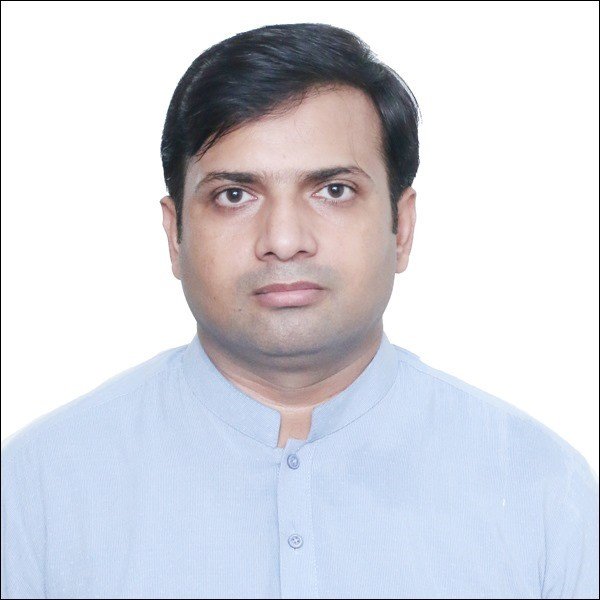
Israr Ahmed is a technology educator and creator behind the YouTube channel “Israr Ahmed Technical,” where he shares practical IT, networking, cybersecurity, and software tutorials. He also runs DriveInTech.com and PakAider.pk to help learners and professionals grow in the digital world.