
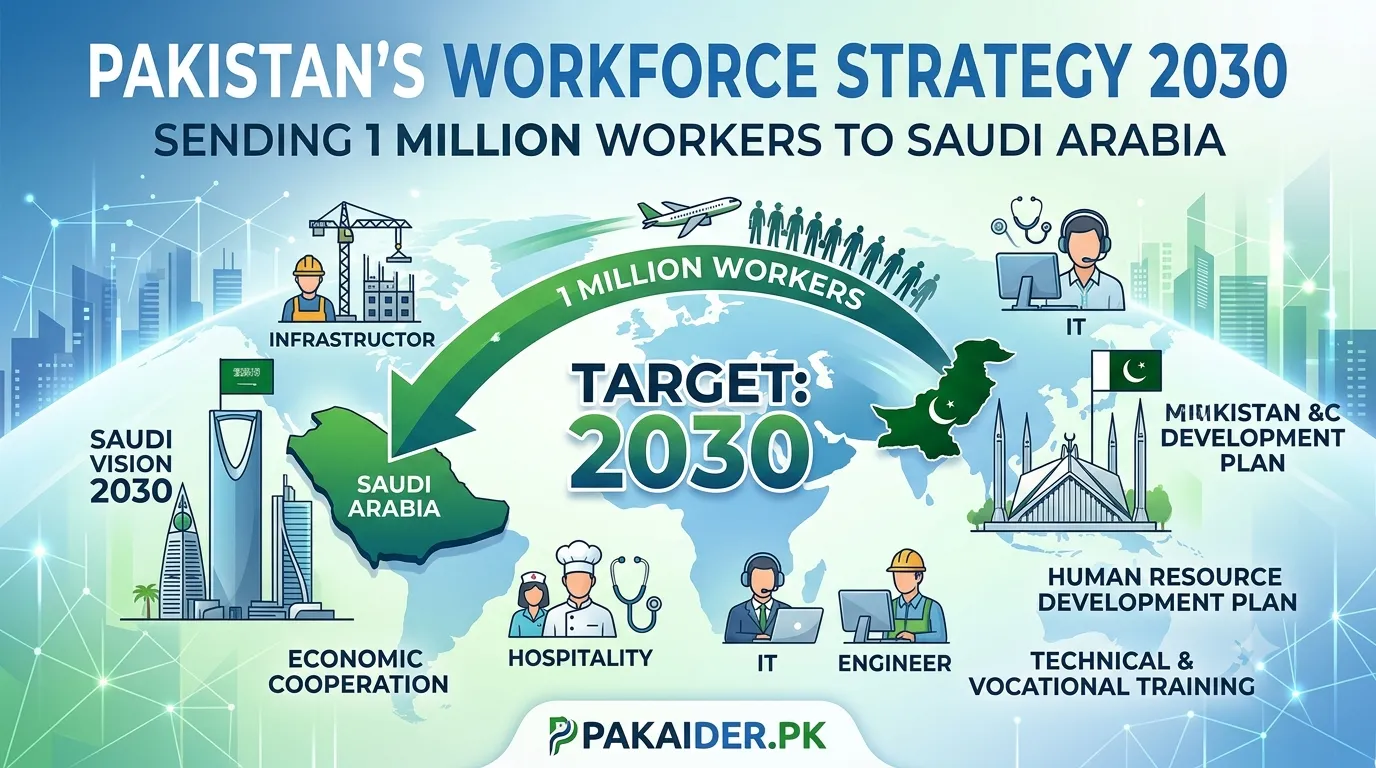
Pakistan Saudi Arabia Workforce Strategy 2030: Pakistan is embarking on a transformative economic journey, aiming to position itself as the primary workforce partner for Saudi Arabia’s booming economy.
As part of a long-term Human Resource Deployment Plan (2025–2039), the Pakistani government has set an ambitious target: to export 1 million skilled workers to Saudi Arabia by 2030. This initiative is not just about employment; it is a strategic alignment with Saudi Vision 2030 and a massive step toward strengthening the economic ties between the two nations.
Read also: Why Students Lose Interest in Studies in Pakistan
Table of Contents
Bridging the Skill Gap: A Strategic Roadmap
The initiative, formulated under the Saudi-Pakistan Economic Cooperation Framework, focuses on creating a consistent pipeline of highly skilled, semi-skilled, and specialized professionals.
Gone are the days of manual labor dependency. The new strategy focuses on high-demand sectors, including:
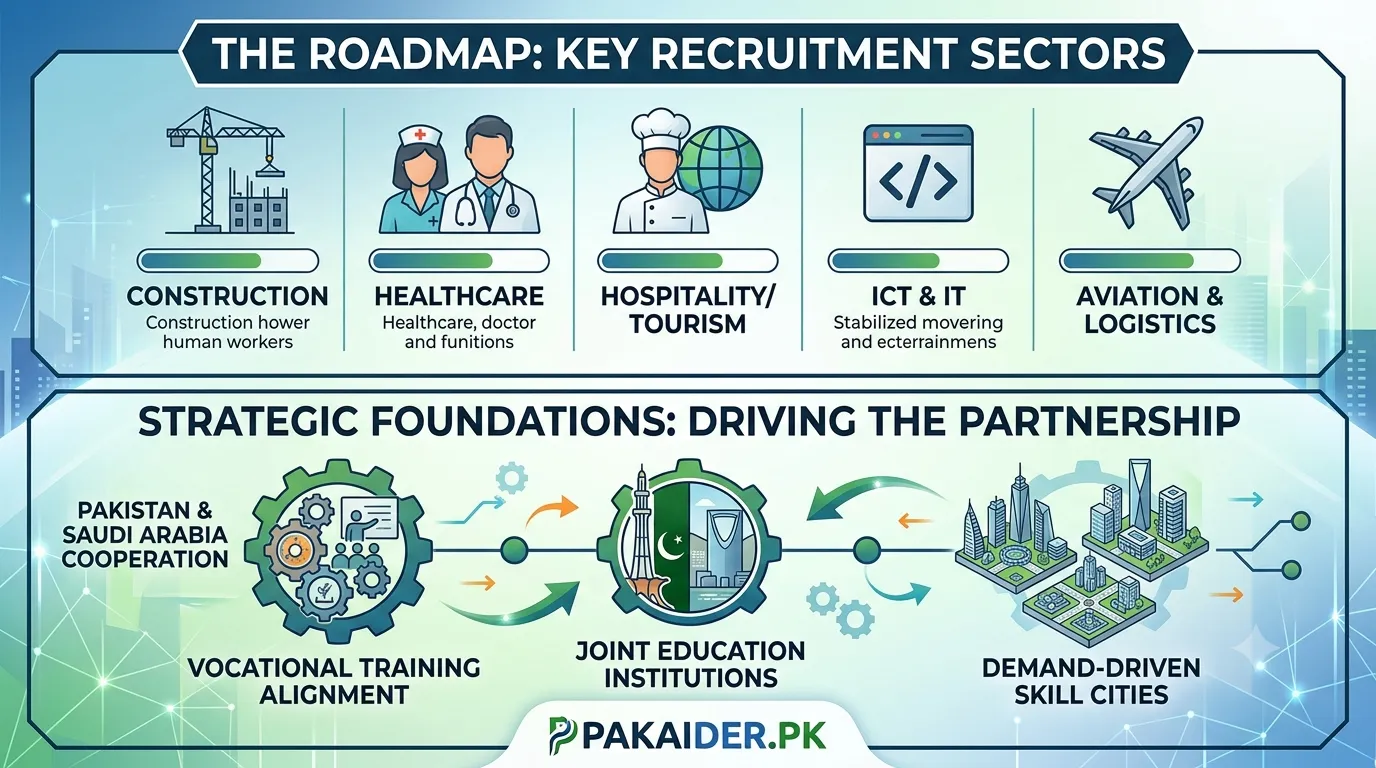
- Construction & Infrastructure: Feeding the massive Giga-projects in the Kingdom.
- Healthcare & Nursing: Providing trained medical professionals.
- Information Technology (ICT) & Engineering: Aligning with Saudi Arabia’s digital transformation.
- Hospitality & Tourism: Preparing for the influx of global travelers in the Kingdom.
- Logistics & Aviation: Supporting the growing transport networks.
Why This Matters for Pakistan’s Economy
The data tells a clear story: in 2025 alone, over 762,000 Pakistanis registered for overseas employment, with a staggering 69.5% choosing Saudi Arabia as their destination. By streamlining this process through official channels, Pakistan aims to move from quantity to quality—shifting toward higher-skilled, higher-remittance employment.
To support this, the government has proposed an investment framework worth $38 billion. This capital is earmarked for:
- $27 Billion for Technical and Vocational Education and Training (TVET).
- $10 Billion for Higher Education.
- The creation of “Skill Cities” and joint educational institutions designed to produce workers who are “Saudi-market ready” before they even leave home.
Looking Beyond 2030: The FIFA World Cup 2034
The strategy is forward-looking. Beyond the 2030 targets, Pakistan is already planning for the infrastructure requirements of the FIFA World Cup 2034. The plan estimates a need for an additional 300,000 to 400,000 workers between 2026 and 2034, specifically in tourism, aviation, and service-oriented sectors.
Collaborative Progress
The momentum is already building. In 2024-2025, Pakistan signed over 70 Memorandums of Understanding (MoUs) and letters of intent. Through collaborations with major Saudi institutions like Takamol, Musaned, and TVET, the recruitment process is becoming more transparent, digitalized, and employer-centric.

The Bottom Line
This workforce development strategy is a game-changer for Pakistan. By aligning its educational output with Saudi Arabia’s infrastructure and service needs, Pakistan is not only helping its youth find meaningful work but is also securing its role as a cornerstone of the Middle East’s economic evolution.
As these reforms take hold, the partnership between Riyadh and Islamabad is poised to become one of the most significant labor and economic alliances in the region.
Thank you urdupoint:
Israr Ahmed is the founder of PakAider and a digital publisher focused on education, student development, and learning opportunities in Pakistan. He creates research-based content covering home tuition, online learning, scholarships, educational initiatives, digital skills, and student support programs. His goal is to connect learners with reliable information, quality educational resources, and practical guidance that supports academic success and lifelong learning.